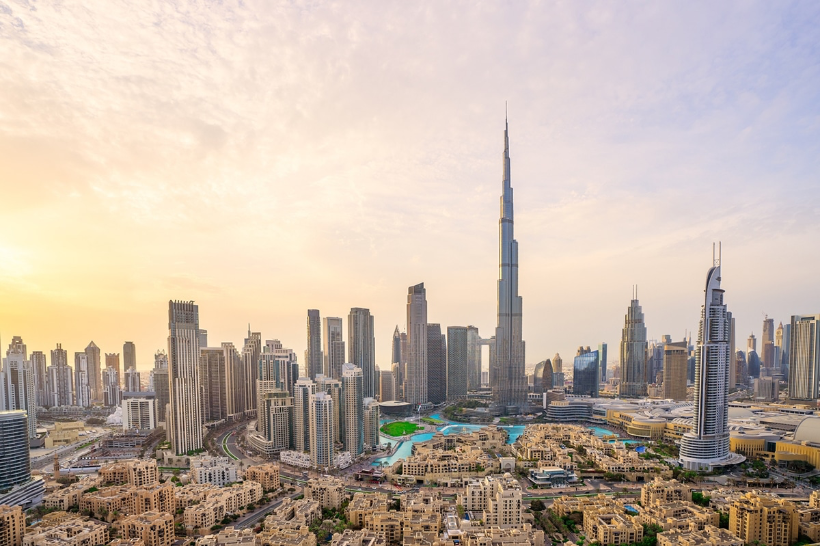
Dubai is becoming an increasingly important destination for the world’s wealthiest individuals, with the number of billionaires based in the city rising to 43 in 2025, according to Altrata’s Billionaire Census 2026.
The latest figures place Dubai eighth among the world’s leading billionaire cities, sharing the position with Shenzhen. The city ranked above several established global wealth centres, including Mumbai, Paris and Washington DC.
Dubai had 41 billionaires in the previous year, meaning its billionaire population increased by two during 2025, representing growth of approximately 4.9%.
The figures come as the UAE continues to attract international wealth, high-net-worth individuals and family offices, supported by the expansion of financial services, investment infrastructure and wealth-management capabilities.
Dubai enters the global top eight
According to Altrata, New York remained the world’s leading billionaire city in 2025, with 164 billionaires. The US financial centre added 12 billionaires during the year.
Hong Kong ranked second with 106 billionaires, while San Francisco came third with 99.
London followed in fourth place with 79 billionaires, ahead of Singapore with 75 and Los Angeles with 73. Beijing ranked seventh with 61 billionaires.
Dubai and Shenzhen both recorded 43 billionaires, placing them jointly in eighth position.
Chicago followed with 42 billionaires, while Mumbai recorded 40. Houston had 39, Paris 38, Istanbul 37 and Washington DC 36.
The ranking demonstrates Dubai’s growing position among international centres of wealth. The emirate had three more billionaires than Mumbai, five more than Paris and seven more than Washington DC.
Altrata counted a total of 975 billionaires across the 15 leading cities in its ranking. Together, these cities accounted for approximately 26% of the world’s billionaire population.
However, the proportion has gradually declined compared with earlier years, when the leading cities accounted for approximately 28% to 30% of the global billionaire population. This suggests that billionaire wealth is increasingly spreading across a wider number of cities and economic centres.
UAE billionaire population rises by 11.3%
The growth in Dubai’s billionaire population forms part of a broader increase in billionaire wealth across the UAE.
Altrata ranked the UAE 14th among the world’s 15 largest billionaire countries, recording 59 billionaires at the end of 2025.
The national billionaire population increased by 11.3% during the year, while their combined wealth reached approximately $201 billion (AED738.2 billion).
Dubai’s 43 billionaires accounted for almost 73% of the UAE’s total billionaire population under Altrata’s methodology.
The UAE’s billionaire population growth also exceeded the global increase of 8.2%.
Across the Middle East, the billionaire population increased by 5% to 254 individuals. Collectively, the region’s billionaires held approximately $700 billion (AED2.57 trillion) in wealth.
The Middle East represented roughly 6.7% of the global billionaire population.
Altrata attributed part of the region’s wealth creation to economic diversification beyond oil as well as large sovereign infrastructure programmes. The UAE and Saudi Arabia were specifically recognised as important centres for these capital flows.
Dubai was also the highest-ranked Middle Eastern city in Altrata’s global top 15 billionaire-city ranking. Istanbul was the only other Middle Eastern city included, with 37 billionaires.
DIFC expands its wealth-management ecosystem
Dubai’s growing billionaire population comes alongside significant expansion in the emirate’s private banking, asset management and family-office ecosystem.
The Dubai International Financial Centre (DIFC) ended 2025 with more than 500 wealth and asset management companies, representing annual growth of 22%.
The number of family-related entities reached 1,289, an increase of 61% during the year.
DIFC-based families had also established 1,115 foundations by the end of 2025, marking an annual increase of 66%.
The expansion continued during the first half of 2026.
By June 2026, DIFC counted 592 wealth and asset management companies. Family business-related entities had increased to 1,408, representing year-on-year growth of 36%.
Foundations increased by 67% to reach 1,409.
The wider DIFC ecosystem also continued to expand. Active registered companies reached 10,018 by June 2026, an increase of 30%, while regulated financial services firms rose 16% to 1,134.
The expansion provides greater institutional capacity for private banking, investment management, succession planning, family foundations, fund management and other services used by wealthy individuals and families.
For Dubai, this growing infrastructure is important because the attraction of global wealth is not limited to individuals relocating to the emirate. It also creates demand for professional services, investment vehicles, family offices and financial institutions capable of managing large pools of capital.
Wealth migration strengthens Dubai’s appeal
The increase in Dubai billionaires also comes against the backdrop of significant international wealth migration into the UAE.
Henley & Partners projected that the UAE would record a net inflow of approximately 9,800 millionaires during 2025, the largest projected inflow globally.
The migrating high-net-worth individuals were expected to bring around $63 billion (AED231.4 billion) in investable wealth.
The DIFC’s February 2026 Global Wealth Outlook indicated that most of these individuals were expected to settle in Dubai.
While millionaire migration and billionaire population figures measure different segments of the wealth market, together they highlight the UAE’s growing appeal to internationally mobile wealth.
Altrata’s data also shows that billionaire wealth is increasingly international in nature. Approximately one in five billionaires globally lives outside their country of birth.
In addition, 38.5% of billionaires own commercial interests headquartered outside their primary country of residence.
According to Altrata, factors such as financial-market depth, regulatory stability, business conditions and tax structures can influence where billionaires choose to live and establish their business interests.
Dubai’s combination of international connectivity, financial infrastructure and business-oriented policies has helped strengthen its position in this increasingly competitive global wealth landscape.
Global billionaire population reaches a record high
Dubai’s rise comes as the global billionaire population reached an all-time high.
Altrata counted 3,795 billionaires worldwide at the end of 2025, representing an increase of 8.2% over the year.
The global billionaire population increased by a net 287 individuals.
Their combined wealth rose even faster, increasing by 12.8% to approximately $15.1 trillion (AED55.45 trillion).
The average billionaire held wealth of around $4 billion (AED14.69 billion), while the median billionaire net worth was closer to $2 billion (AED7.35 billion).
Business ownership remains the dominant component of billionaire wealth.
Altrata estimates that approximately 73% of the average billionaire’s portfolio is held in listed or privately owned companies.
Public-company holdings account for around 38% of billionaire portfolios, while stakes in private companies represent approximately 34.5%.
Banking and finance remained the largest primary industry among billionaires, accounting for 19.6%.
Technology represented 7.5%, while real estate accounted for 7.1%.
Dubai’s wealth hub ambitions continue
Dubai’s rise to 43 billionaires places it firmly among the world’s most important billionaire cities.
Although the city remains significantly behind traditional wealth centres such as New York, Hong Kong, San Francisco and London in absolute billionaire numbers, its position ahead of cities including Mumbai, Paris and Washington DC highlights the pace at which Dubai has developed as an international wealth destination.
The emirate’s growth is also supported by an expanding financial ecosystem. The increase in wealth and asset management firms, family-related entities and foundations within DIFC provides infrastructure for wealthy families seeking investment management, succession planning, asset protection and long-term wealth structuring.
At the same time, continued inflows of internationally mobile millionaires are broadening Dubai’s private wealth base beyond its existing billionaire population.
The latest Altrata figures therefore point to more than an increase in the number of Dubai billionaires. They reflect the emirate’s broader emergence as a global centre for private capital, family wealth and international investment.
With 43 billionaires at the end of 2025 and continued expansion across its financial and wealth-management sectors in 2026, Dubai is strengthening its position in the global competition to attract and retain the world’s wealthiest individuals.
Post Views: 14