Dubai is moving ahead with a major road infrastructure project designed to ease congestion, strengthen connectivity between growing communities and provide motorists with more efficient alternatives to some of the emirate’s busiest highways.
The Al Meydan Street Development Project has been awarded by the Roads and Transport Authority (RTA) through two contracts with a combined value of Dh1.161 billion. The project is scheduled for completion by the end of 2028 and will deliver approximately 3.7km of bridges and 17km of roads, alongside cycling infrastructure connecting the corridor to Dubai’s existing cycling network.
The Al Meydan Street Development Project will serve communities with a combined population of more than 500,000 residents, including Dubai Hills, Nad Al Sheba, Mohammed Bin Rashid Gardens, Dubai District One and Al Barari.
Dubai road project aims to cut journey times
One of the most significant expected benefits of the Al Meydan Street Development Project will be a substantial reduction in travel times along important north-south routes.
According to the RTA, a key journey between Al Manama Street and Dubai–Al Ain Road towards Umm Suqeim Street is expected to fall from approximately 30 minutes to 10 minutes once the project is completed.
That represents a reduction of around 66 per cent in travel time.
The upgraded corridor is also expected to increase the capacity of Dubai’s north-south traffic routes by approximately 18 per cent. By improving intersections and introducing additional bridges and road links, the project will provide motorists with alternative routes alongside major corridors such as Sheikh Mohammed bin Zayed Road and Al Khail Road.
Mattar Al Tayer, Director General and Chairman of the Board of Executive Directors at RTA, said the authority was adopting a proactive approach to road planning and infrastructure development to keep pace with Dubai’s population and economic growth.
He said the objective was to create an integrated and efficient road network capable of supporting higher traffic volumes while providing greater flexibility for motorists.
Al Tayer described Al Meydan Street as one of Dubai’s strategic corridors because it runs parallel to and supports Sheikh Mohammed bin Zayed Road and Al Khail Road.
The project, he said, would strengthen links between the emirate’s main roads, improve traffic distribution and enhance mobility between major residential and development areas.
First contract covers major road and bridge upgrades
The first contract under the Al Meydan Street Development Project covers approximately 14km of works extending between Latifa bint Hamdan Street and Umm Suqeim Street.
It will also include the development of Al Marabea’ Street, connecting Dubai Hills with Sheikh Mohammed bin Zayed Road.
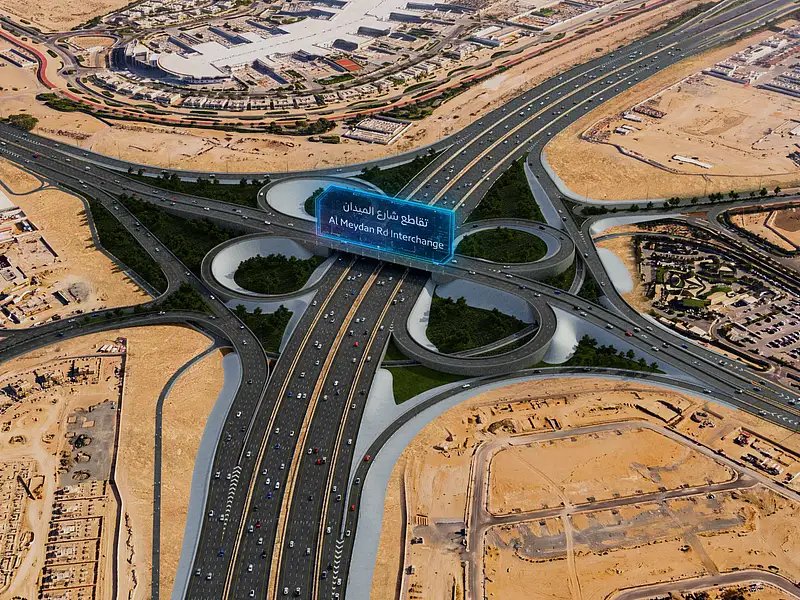
A major component will be the redevelopment of the existing Al Marabea’ Street-Al Meydan Street junction into a grade-separated interchange.
The new interchange will include bridges stretching approximately 1,600 metres and will feature four lanes in each direction. Once completed, it will have the capacity to accommodate up to 14,400 vehicles per hour in both directions.
The development is expected to improve traffic movement through one of the important connections between residential communities and Dubai’s wider arterial road network.
The first contract will also provide a direct three-lane connection between Al Marabea’ Street and Sheikh Mohammed bin Zayed Road.
This connection will have a capacity of approximately 7,800 vehicles per hour in both directions, providing another route for motorists travelling between Dubai Hills and the wider road network.
Nad Al Sheba to receive elevated road link
The project will also introduce infrastructure aimed at improving accessibility for residents of Nad Al Sheba.
A new 700-metre elevated link on Dubai–Al Ain Road towards Nad Al Hamar Street will provide improved access to the main road network.
The link forms part of the wider strategy to improve connections between residential communities and major arterial roads while reducing pressure on existing junctions.
For communities experiencing continued residential and commercial development, improved access to major highways is expected to support shorter and more predictable journeys.
Second contract focuses on Al Meydan Street to Muscat Street
The second contract covers the section of Al Meydan Street extending from First Al Khail Street, through Al Khail Road, to Muscat Street.
The works will include approximately 2km of new surface roads connecting Al Meydan Street with Latifa bint Hamdan Street.
Another major element will be the redevelopment of the existing signalised Al Meydan Street-Muscat Street junction.
The junction will be converted into a multi-level, grade-separated interchange, with approximately 1.4km of bridges and four lanes in each direction.
The transformation is expected to improve traffic flow through the junction by separating key traffic movements and reducing reliance on conventional signal-controlled crossings.
Together, the two contracts will create a more connected corridor and improve the movement of vehicles between several major roads across Dubai.
Cycling infrastructure included in the project
The Al Meydan Street Development Project is not limited to road and bridge construction.
The RTA will also introduce cycling infrastructure as part of the development, including cycling underpasses beneath Al Meydan Street.
These facilities will connect the corridor with Dubai’s wider cycling network and are intended to provide safer and more continuous movement for cyclists.
The inclusion of cycling infrastructure reflects Dubai’s broader efforts to develop a transport network that supports different forms of mobility rather than focusing solely on private vehicles.
The RTA has said the project is intended to create a more connected and sustainable network while improving road capacity.
Project to strengthen Dubai’s wider road network
The Al Meydan Street project is also being developed as part of a wider programme of road infrastructure improvements across Dubai.
It will work alongside the recently launched 12km Latifa bint Hamdan Street Development Project, creating stronger connections between several of the emirate’s major arterial roads.
These include Sheikh Zayed Road, Al Khail Road, Sheikh Mohammed bin Zayed Road, Emirates Road and Sheikh Zayed bin Hamdan Al Nahyan Street.
The Latifa bint Hamdan Street project includes seven bridges and eight tunnels and is expected to accommodate approximately 16,000 vehicles per hour in both directions.
Daily traffic on the route is projected to exceed 130,000 trips once the project is operational.
The project is also expected to significantly reduce travel times. The RTA estimates that the journey between Umm Al Sheif Street and Emirates Road will fall from approximately 33 minutes to 15 minutes, representing a reduction of about 54 per cent.
Supporting Dubai’s growing communities
The scale of the Al Meydan Street Development Project reflects the rapid growth of communities along Dubai’s expanding urban corridors.
Areas including Dubai Hills, Nad Al Sheba, Mohammed Bin Rashid Gardens, Dubai District One and Al Barari have experienced significant residential and development activity, increasing demand for efficient connections to major employment, commercial and transport hubs.
By adding new road capacity and grade-separated intersections, the project is designed to distribute traffic more effectively rather than concentrating vehicles on a limited number of major highways.
The additional connections could also give motorists more route options during periods of heavy traffic, helping improve overall network resilience.
Construction scheduled for completion in 2028
The RTA has divided the Al Meydan Street works into two contracts to accelerate construction while ensuring that the different components remain integrated.
The full project is scheduled for completion by the end of 2028.
Once delivered, the combination of bridges, surface roads, upgraded interchanges and cycling links is expected to transform movement along Al Meydan Street and improve connections between several important areas of Dubai.
With a projected 18 per cent increase in north-south corridor capacity and a key journey potentially falling from 30 minutes to just 10 minutes, the project is expected to become an important part of Dubai’s long-term transport infrastructure.
The development also forms part of the emirate’s broader strategy to expand and modernise its road network in line with population growth, new residential developments and rising economic activity.
For more than 500,000 residents across the communities served by the project, the new connections are expected to provide faster access to Dubai’s major roads while improving the overall efficiency and flexibility of daily travel.
Post Views: 31