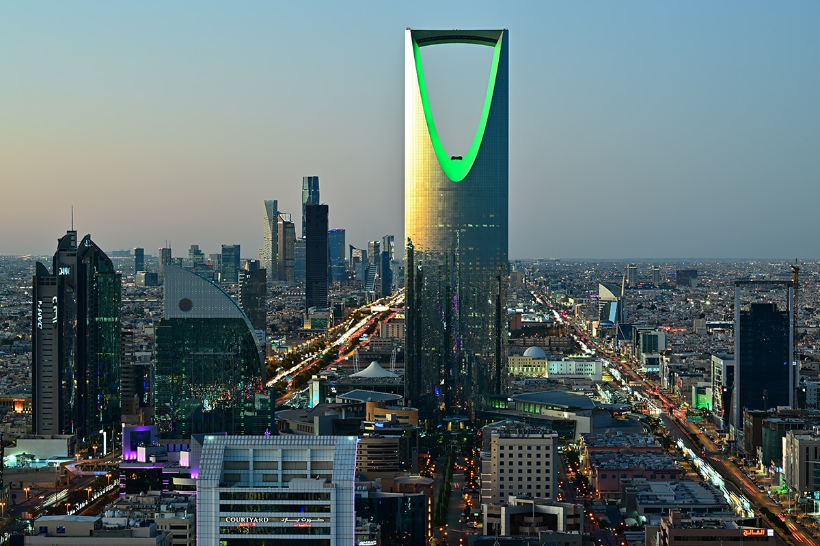
Saudi Arabia Adobe AI tools are set to become widely available under a new initiative that Adobe values at more than $4 billion (AED14.7 billion), marking a significant push to bring generative artificial intelligence to consumers, students, entrepreneurs and businesses across the kingdom.
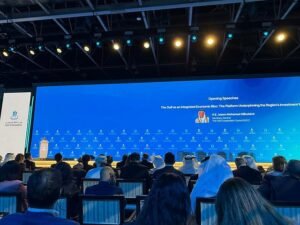
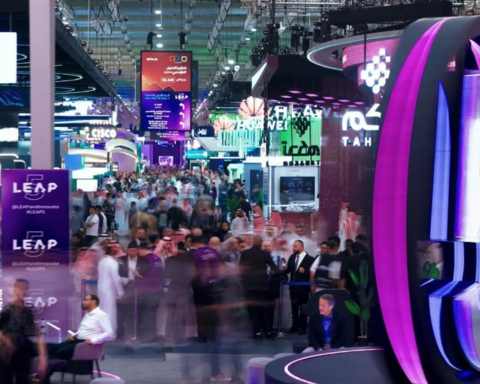
Announced at LEAP 2026 in Riyadh, the initiative will provide eligible Saudi citizens and residents aged 13 and above with 12 months of access to Adobe Firefly Standard and premium features within Adobe Express.
Adobe plans to make the subscriptions available by the end of 2026 through an expanded partnership with Saudi Arabia’s Ministry of Communications and Information Technology and HUMAIN, the artificial intelligence company owned by the Public Investment Fund (PIF).
Adobe’s $4bn AI access initiative
The $4 billion figure attached to the initiative does not represent a direct cash investment from Adobe or the Saudi government.
Instead, it reflects Adobe’s valuation of the free access being provided to users through the programme.
The scale of the initiative nevertheless makes it one of the largest efforts to expand consumer access to commercial generative AI tools in the region. By making Adobe’s creative technology available to a population of more than 27 million people, Saudi Arabia aims to move AI adoption beyond specialised technology companies and large-scale infrastructure projects.
Eligible users will receive access for one year, giving individuals an opportunity to experiment with generative AI for creative, educational, professional and commercial purposes.
Adobe Firefly can be used to generate and edit a range of creative assets, including images, video and audio. Adobe Express, meanwhile, provides templates and editing tools that can be used to create social-media content, presentations, posters and other digital materials.
The combination is designed to make generative AI accessible not only to professional designers but also to students, entrepreneurs, content creators and ordinary users looking to produce digital content.
Adobe and HUMAIN to build Saudi-focused image generator
A central element of the partnership will be the development of a new image-generation model specifically designed for Saudi users and businesses.
Adobe and HUMAIN will develop the model using Adobe Firefly Foundry. It will be designed to understand Arabic-language prompts and generate images informed by Saudi culture, visual references and local creative requirements.
The companies say the objective is to create AI that can better understand the cultural context in which it is being used.
HUMAIN chief executive Tareq Amin said the partnership combines Adobe’s creative technology with the company’s regional expertise.
The initiative is intended to address one of the challenges facing generative AI systems as they expand into different markets: producing content that accurately reflects local cultures, languages and visual identities.
Rather than simply translating existing AI tools into Arabic, Adobe and HUMAIN are developing technology intended to incorporate Saudi-specific cultural context into image generation.
Amin said the technology would be built locally while being designed with the ambition of competing and scaling globally.
Arabic support expands across Adobe Express
Adobe is also expanding its support for Arabic-language creative work.
The company has introduced Modern Standard Arabic support across the desktop, web and iOS versions of Adobe Express. The update includes right-to-left typography, Arabic text editing and user-interface controls adapted for Arabic-language use.
Adobe has also introduced templates designed around Saudi culture.
The changes could make Adobe Express more practical for Saudi users who want to create social-media posts, marketing materials, presentations and other digital content in Arabic.
For businesses, improved Arabic support could also make generative AI tools more useful for local advertising, communications and customer engagement.
The development comes as Saudi Arabia seeks to establish itself as a major global centre for artificial intelligence while ensuring that AI applications are relevant to its domestic market.
Start-ups to receive free Adobe access
The initiative will extend beyond individual users.
Eligible start-ups and early-stage companies participating in Saudi Arabia’s Center of Digital Entrepreneurship and The Garage will receive one year of free access to selected Adobe products from early 2027.
The programme is intended to help emerging companies incorporate creative and AI capabilities into their businesses without immediately taking on the cost of commercial software subscriptions.
For start-ups developing new products, marketing campaigns or digital services, access to AI-powered creative tools could reduce the time and resources required to produce visual content.
The partnership also includes training and expertise from Adobe.
Courses delivered through the Adobe Digital Academy will be used to develop creative, marketing and AI skills, supporting the broader objective of building a workforce capable of using artificial intelligence in practical commercial and creative settings.
Saudi Arabia shifts focus from AI infrastructure to adoption
Saudi Arabia has invested heavily in artificial intelligence infrastructure, computing capacity and technology companies as part of its broader economic transformation strategy.
The new Adobe initiative represents a different part of that strategy.
Instead of focusing primarily on data centres, chips and AI infrastructure, the programme is aimed at increasing the number of people and businesses actively using artificial intelligence.
That shift could become increasingly important as governments across the Gulf compete to establish leadership in AI.
Saudi Arabia and the UAE have committed billions of dollars to AI-related infrastructure, companies and technology investments. However, the long-term impact of those investments will also depend on whether AI becomes embedded in everyday economic activity.
Making creative AI tools available to tens of millions of people could accelerate that process.
Students could use the technology for projects and presentations, entrepreneurs could create marketing materials, and businesses could use generative AI to produce digital campaigns and other content.
Government sees AI as an economic opportunity
Saudi Minister of Communications and Information Technology Abdullah Alswaha said the partnership would help convert the kingdom’s investment in AI into opportunities for individuals and businesses.
That focus reflects Saudi Arabia’s broader ambition to build an economy in which technology contributes to new companies, jobs and commercial opportunities.
Adobe chairman and chief executive Shantanu Narayen also highlighted the potential of combining Adobe’s creative technology with local expertise.
The objective is not simply to give users access to AI tools but to help them transform ideas into commercially useful products and content.
For Saudi entrepreneurs and small businesses, generative AI could potentially lower some of the barriers associated with producing professional-quality marketing and creative materials.
Building on the Adobe-HUMAIN relationship
The latest programme builds on a strategic agreement signed by Adobe and HUMAIN at the US-Saudi Investment Forum in November 2025.
The expanded partnership adds a consumer and business adoption component to the relationship, while also introducing the development of a Saudi-focused AI image-generation model.
HUMAIN, which is owned by Saudi Arabia’s Public Investment Fund, has emerged as a key part of the kingdom’s strategy to develop AI capabilities and infrastructure.
Adobe brings its established creative software ecosystem and generative AI technology, while HUMAIN provides regional expertise and a connection to Saudi Arabia’s wider AI strategy.
The combination could allow the companies to develop tools that are both globally competitive and locally relevant.
What the initiative means for Saudi users
For consumers, the most immediate benefit will be access to Adobe’s AI-powered creative tools without the usual subscription cost for the 12-month period.
Users aged 13 and above who meet the programme’s eligibility requirements will be able to access Adobe Firefly Standard and premium features within Adobe Express.
The tools could be used for everything from generating images and editing creative assets to producing presentations, posters and social-media content.
For businesses and entrepreneurs, the benefits could extend further as training, localised templates and Arabic-language capabilities become more widely available.
The development of a Saudi-focused image-generation model could also create opportunities for businesses that need culturally specific imagery for advertising, tourism, retail, entertainment and other sectors.
A new phase in the Gulf’s AI race
The Adobe-HUMAIN initiative highlights how competition in the Gulf’s AI sector is beginning to move beyond investment in infrastructure.
Saudi Arabia and the UAE have already attracted international attention through major commitments to AI computing, data centres, chips and technology companies. The next stage of the competition could increasingly revolve around adoption.
The countries that succeed in turning AI infrastructure into widespread use across businesses, education and the wider population could gain a stronger economic advantage.
Saudi Arabia’s decision to provide broad access to Adobe’s AI tools represents an attempt to accelerate that adoption at scale.
The emphasis on Arabic-language capabilities and Saudi cultural context also reflects a growing recognition that global AI systems need to adapt to local markets rather than simply offer translated versions of existing products.
If successfully implemented, the initiative could give millions of people practical experience with generative AI while helping Saudi businesses develop new creative and commercial applications.
With subscriptions expected to become available by the end of 2026 and start-up access beginning in early 2027, the programme will provide a significant test of how quickly large-scale consumer access can translate into real-world AI adoption.
More broadly, the partnership signals Saudi Arabia’s ambition to make artificial intelligence part of everyday economic and creative activity — not just a technology concentrated in data centres and large corporations.
Post Views: 28