



Saudi Firms Demand Measurable Results From Consultants
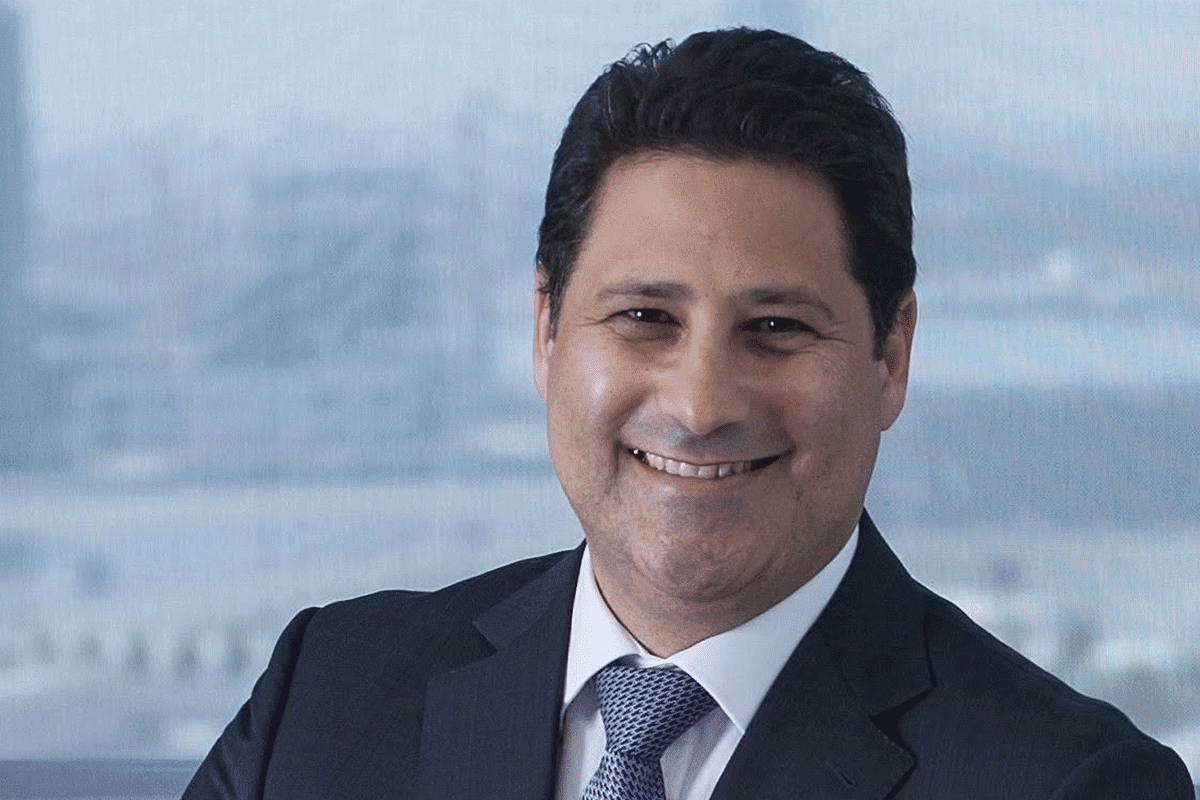
Saudi firms are increasingly asking consultants to have “skin in the game” by taking greater responsibility for the business outcomes of transformation programmes, according to Deloitte Middle East CEO Mutasem Dajani.
The shift reflects a broader change in how organisations across Saudi Arabia are approaching major technology and transformation investments. Rather than measuring the success of consulting engagements primarily by whether a strategy has been completed or a digital system has been delivered, companies are increasingly looking at whether those projects generate measurable improvements in performance.
Speaking to Arabian Business at LEAP in Riyadh, Dajani said Deloitte was having more discussions with clients around outcome-based engagements.
“Today, we are increasingly having conversations in which our work is outcome-based instead of deliverable-based,” he said.
Under this approach, consulting firms are expected to share greater responsibility for helping clients achieve the intended benefits of transformation programmes. This could include improvements in productivity, cost savings, new revenue opportunities or better customer and citizen services.
Dajani said the change means consultants are no longer being asked simply to develop strategies or build technology according to specifications.
“This means we are equally committed to our clients achieving business benefits from their transformation programmes, not just to a digital solution that functions based on specifications,” he said.
The development comes as Saudi Arabia places greater emphasis on financial discipline across government spending and major development projects. With significant investments being made as part of the Kingdom’s economic transformation, organisations are facing increasing pressure to demonstrate that technology and transformation spending is producing tangible economic value.

Deloitte Clients Want Help Delivering Transformation
The changing expectations are also expanding the role of professional services firms.
According to Dajani, Saudi organisations are increasingly asking Deloitte to participate in implementation and delivery rather than simply advising them on strategy.
“They have started asking us to have skin in the game by helping them deliver the vision, not only strategising with them,” he said.
That approach could make consulting relationships more closely connected to the long-term performance of transformation initiatives.
For Saudi organisations, the focus on outcomes is particularly relevant as businesses and government entities move from conventional digitalisation towards artificial intelligence, automation and new operating models.
The challenge is no longer simply introducing a new technology platform. Organisations must determine how technology changes their processes, workforce structures, customer interactions and decision-making.
This is becoming increasingly important as companies experiment with generative AI and agentic AI systems.
Deloitte Plans $1.7bn EMEA Technology Investment
Deloitte is also preparing to invest more than $1.7 billion across Europe, the Middle East and Africa in generative AI, sovereign cloud and other technologies.
Dajani did not reveal how much of the investment will be directed specifically towards Saudi Arabia or the wider Middle East. However, he described the region as an integral part of Deloitte’s EMEA business and potentially its fastest-growing market.
The investment is expected to provide Deloitte professionals with access to technology that can be developed and deployed for clients while taking into account regulations and requirements in individual markets.
Sovereign cloud capabilities are particularly relevant in the Middle East, where governments and large organisations are placing greater emphasis on data sovereignty, security and regulatory compliance.
Saudi Arabia is expected to be an important market for Deloitte’s investment as organisations accelerate their adoption of AI technologies.
Saudi Organisations Move Towards AI-Native Operations
Dajani said almost all of Deloitte’s Saudi clients had adopted artificial intelligence to some extent.
However, he cautioned that simply giving employees access to AI tools does not necessarily result in significant financial returns.
“Putting a general assistant in the hands of employees, while it improves efficiency, is not where financial returns are maximised,” he said.
The larger opportunity, according to Dajani, comes from redesigning entire business operations around generative and agentic AI.
This means integrating AI across departments and processes rather than deploying isolated tools that sit alongside existing systems.
Organisations seeking greater returns may need to redesign operating models, change workflows, integrate data and technology platforms, and prepare employees for new ways of working.
“Many of our clients are reimagining their operations and building their operating models towards being AI-native, but this is a longer and somewhat complex journey,” Dajani said.
He added that the return on investment is closely connected to how effectively organisations integrate AI horizontally across their operations.
“The ROI is directly linked to the horizontal integration that organisations must achieve in order for them to maximise the return,” he said.
66% of Saudi Consumers Use Generative AI
Deloitte research cited by Dajani found that 66 per cent of consumers in Saudi Arabia now use generative AI.
The figure highlights the speed at which AI is entering everyday life in the Kingdom. At the same time, consumer adoption does not necessarily indicate that businesses have already achieved large-scale financial benefits from AI.
Dajani did not provide a figure for the percentage of Deloitte’s Saudi clients that have deployed AI at scale or demonstrated a proven financial return.
The next stage of the Kingdom’s AI development is therefore likely to focus less on basic adoption and more on measurable impact.
For businesses, this could mean using AI to automate complex workflows, improve customer experiences, optimise operations, support decision-making and create new products and services.
For government organisations, AI could play a role in improving citizen services and making public-sector operations more efficient.
Digital Transformation Is Producing Results
Dajani also pointed to examples of Saudi Arabia’s wider digital transformation producing tangible results.
He highlighted Deloitte’s work with the Zakat, Tax and Customs Authority on e-invoicing, which has received international recognition.
Government entities are also increasingly using technology to improve services for citizens, demonstrating how digital transformation can extend beyond internal efficiency and directly affect public-facing services.
Financial institutions in the Kingdom are similarly investing in cloud, digital and AI technologies.
These systems can help banks and other financial organisations reduce operating costs while creating opportunities for new revenue streams.
At the same time, Saudi Arabia’s growing start-up and SME ecosystem is contributing to economic output and helping develop local technology and business talent.
AI Could Help Saudi Arabia Build Technology Domestically
Dajani believes the rapid development of AI has created an opportunity for Saudi Arabia to move further up the global technology value chain.
Historically, emerging markets have often relied heavily on established technology economies for software, infrastructure and advanced technology solutions.
The rapid development of AI could alter that dynamic by reducing some of the barriers that previously separated established technology powers from newer entrants.
“The age of AI has somewhat levelled the playing field and has opened so many exciting opportunities for the Kingdom,” Dajani said.
Saudi Arabia is already making significant investments in technology infrastructure, digital transformation and artificial intelligence. Further investment in areas such as AI infrastructure, cloud computing, STEM education and advanced manufacturing could help the Kingdom develop more technology domestically.
The objective would be to create a broader local technology ecosystem covering research, talent, infrastructure, software, manufacturing and deployment.
Dajani said the Kingdom was taking steps towards becoming an end-to-end technology producer rather than remaining primarily a technology importer.
“The Kingdom is surely making the right steps towards becoming an end-to-end producer of technology,” he said.
What Saudi Firms’ Shift Means for the Consulting Industry
The move towards outcome-based consulting could have wider implications for professional services firms operating in Saudi Arabia.
As clients demand measurable returns, consultants may increasingly be evaluated on metrics such as cost reduction, productivity, revenue growth, customer satisfaction and operational improvements rather than traditional project milestones alone.
It could also encourage consulting firms to become more involved in implementation, technology deployment and organisational change.
For Saudi businesses, the model could provide greater alignment between consulting fees and the actual value generated by transformation projects.
However, outcome-based engagements can also be more complex to structure because organisations and consulting firms must agree on measurable targets, responsibilities and timelines.
The approach may become particularly important for AI projects, where the difference between deploying a technology and achieving meaningful business transformation can be significant.
Saudi Arabia’s Next AI Challenge Is Turning Adoption Into ROI
Saudi firms have moved rapidly into the adoption phase of artificial intelligence, but the next challenge will be demonstrating measurable returns.
Deloitte’s experience suggests that simply introducing AI assistants or individual applications may deliver efficiency gains, but the largest opportunities could come from deeper changes to how organisations operate.
That transformation requires businesses to integrate AI across functions, redesign operating models and prepare their workforces for new processes.
As Saudi Arabia continues its economic diversification and technology investment, consulting firms are likely to face greater pressure to demonstrate tangible results.
For Deloitte, its planned $1.7 billion EMEA technology investment comes as the firm seeks to support clients through this next stage of transformation.
For Saudi Arabia, the combination of AI adoption, sovereign cloud infrastructure, digital government, financial-sector innovation, start-up growth and investment in local talent could help the Kingdom strengthen its position in the global technology economy.
The emerging model is therefore not simply about adopting artificial intelligence. It is about connecting technology investment to measurable economic outcomes and building the capabilities needed to create technology within the Kingdom itself.

- Falcons of Majlis Targets UAE Startups With Serious Capital and Mentorship
- Dubai Tailoring House Suited & Booted to Open ‘World’s Largest’ Bespoke Flagship
- AIM Congress 2026: Africa Turns to Gulf Investors to Drive Its Next Growth Phase
- DUBAI CHAMBER CANVA BUSINESS: SMEs Get Free One-Year Access to AI-Powered Design Tools