Falling renewable-energy costs, advances in battery technology and increased private-sector participation are reshaping the UAE’s power sector and supporting the country’s long-term energy diversification strategy.
The UAE has increased its clean energy target to 35 per cent by 2030-2031 as the country steps up efforts to expand renewable and nuclear power capacity while strengthening its electricity infrastructure.
Suhail bin Mohammed Al Mazrouei, Minister of Energy and Infrastructure, said the new target will require additional energy projects, stronger competition and greater private-sector involvement in power generation.
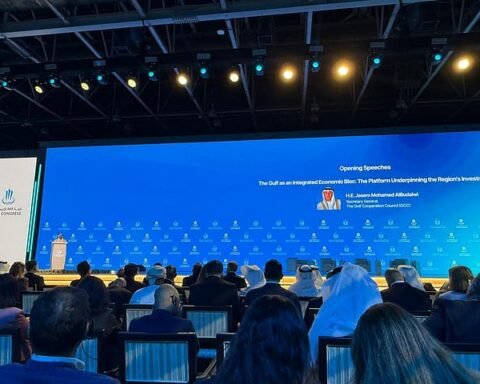
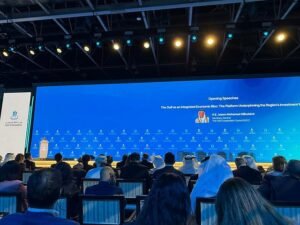
Speaking on the sidelines of Middle East Energy 2026 in Dubai, Al Mazrouei said the 35 per cent target covers both nuclear and renewable energy.
The updated target comes as the economics of electricity generation continue to change, with the cost of renewable energy declining and battery storage becoming increasingly capable of supporting electricity supply for longer periods.
UAE clean energy target reflects changing power economics
The UAE is continuing to monitor and update its energy strategy as technological advances and declining costs create new opportunities across the electricity sector.
Al Mazrouei said the country’s approach is focused on diversifying its generation mix while maintaining sufficient surplus capacity to meet electricity demand under different circumstances.
The strategy includes continued investment in new power plants and electricity grids, with the UAE also seeking to reduce transmission and distribution losses, improve efficiency and ensure competitive electricity prices.
The combination of nuclear power, solar energy and battery storage is expected to play an increasingly important role in the country’s future electricity mix.
Renewable-energy costs have fallen significantly as projects have expanded globally and technology has improved. At the same time, improvements in battery technology are changing the role that solar power can play in national electricity systems.
Battery storage brings 24-hour solar power closer
One of the most significant developments highlighted by Al Mazrouei is the rapid improvement in energy-storage technology.
According to the minister, batteries can now store electricity for up to 24 hours at competitive prices, compared with around two or three hours previously.
The development could significantly expand the role of solar power in the UAE because electricity generated during daylight hours can be stored and supplied when solar generation is unavailable.
This means solar power can increasingly provide a continuous electricity supply rather than being limited to periods of strong sunlight.
Al Mazrouei said the development of long-duration storage makes solar power increasingly comparable with natural gas, nuclear energy and other sources capable of providing more consistent electricity output.
The shift is particularly significant for the UAE, where high solar irradiation provides strong conditions for large-scale solar projects.
By combining large solar installations with battery storage, the country is seeking to create a power system that can provide cleaner electricity while maintaining reliability and meeting growing demand.
UAE expands nuclear and renewable infrastructure
Opening Middle East Energy 2026, Al Mazrouei highlighted the scale of the UAE’s existing and planned clean-energy infrastructure.
The country’s energy portfolio includes the Barakah Nuclear Energy Plant, which represents a major component of its low-carbon electricity strategy.
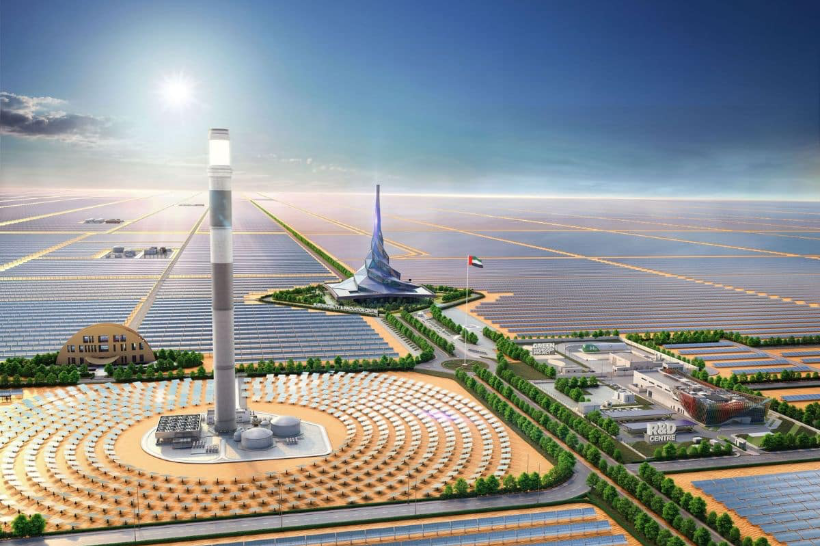
The UAE is also developing what has been described as the world’s largest 24/7 solar-plus-storage project.
The planned project is expected to have 5.2 GW of solar-power capacity combined with 19 GWh of battery storage.
The large-scale combination of generation and storage illustrates how the UAE is seeking to move beyond conventional solar-power deployment and develop renewable electricity that can support demand around the clock.
The project is also an example of how advances in battery technology are influencing long-term electricity planning.
Rather than treating renewable energy and reliability as separate objectives, the UAE is increasingly combining generation capacity with storage and grid investment to create a more flexible electricity system.
Greater private-sector participation expected
Meeting the UAE clean energy target will also depend on continued investment from the private sector.
Al Mazrouei said the UAE’s power-generation sector has long been open to private participation, with privatisation helping to reduce costs, increase competition and strengthen governance standards.
Greater private-sector involvement is expected to support the development of additional generation projects as the country works towards the 2030-2031 target.
The changing economics of renewable energy and storage could also create more opportunities for companies to develop and operate large-scale electricity projects.
The UAE has already established a significant role for national companies in the international energy market.
Al Mazrouei pointed to UAE companies competing for and winning projects internationally, including Masdar, Etihad and other national companies.
Their growing international presence could further support the UAE’s ambitions to become a major player in clean-energy development beyond its domestic market.
Electricity grids and interconnectivity become increasingly important
As the UAE adds more renewable and nuclear generation capacity, strengthening electricity infrastructure will become an important part of the transition.
Al Mazrouei said additional investment in electricity grids and cross-border connections will be required as power systems evolve.
Greater electricity interconnectivity between countries and regions can allow electricity to be shared more efficiently and can improve the resilience of power systems.
The minister said stronger interconnected grids can create economic and operational value while improving energy security and allowing cleaner electricity to be shared more effectively across borders.
For the UAE, grid development is therefore becoming an important complement to investments in generation and battery storage.
As electricity production becomes more diversified, a stronger and more flexible grid can help balance supply and demand while supporting the integration of different generation technologies.
UAE balances energy security with sustainability
The UAE’s updated clean-energy target comes as the country seeks to balance three priorities: energy security, sustainability and economic growth.
The expansion of nuclear energy provides a source of low-carbon electricity, while large-scale solar projects take advantage of the country’s abundant solar resources.
Battery storage, meanwhile, can help address the intermittent nature of solar generation by shifting electricity supply from periods of high solar production to periods of demand.
This combination is becoming increasingly important as the UAE seeks to reduce its dependence on conventional generation while maintaining reliable electricity supplies.
The government’s strategy also recognises that electricity demand can vary significantly under different circumstances. Maintaining surplus generation capacity and investing in grid infrastructure will therefore remain important even as clean-energy capacity expands.
UAE’s energy transition enters a new phase
The increase in the UAE clean energy target to 35 per cent by 2030-2031 signals a broader shift in the country’s energy strategy.
Rather than focusing only on adding renewable-generation capacity, the UAE is developing an integrated system involving nuclear power, solar generation, long-duration battery storage, modern electricity grids and private investment.
The rapid development of storage technology could be particularly important. If batteries can economically provide up to 24 hours of storage, solar power can take on a larger role in meeting electricity demand beyond daylight hours.
The UAE’s planned 5.2 GW solar and 19 GWh storage project demonstrates the scale of this approach.
At the same time, continued investment in electricity networks and interconnections will be necessary to ensure that new generation capacity can be used efficiently.
With the UAE clean energy target now set at 35 per cent by 2030-2031, the country is positioning itself for a power sector increasingly shaped by renewable energy, advanced storage and private-sector investment.
The combination of declining technology costs, expanding infrastructure and greater competition could accelerate the transformation of the UAE’s electricity market while supporting its broader ambitions for energy security and a lower-carbon economy.
Post Views: 6